


“Natural wine” is one of the most-used phrases in wine right now, and one of the least defined. Most countries have no legal definition at all. To some drinkers it means honest wine from small growers. To others it means cloudy, funky bottles that taste different every time you open one.
At Cosecha Imports we import wine from growers who work with as little intervention as possible. But we don’t sell natural wine in the strict sense, and that’s a deliberate choice. Here’s what natural wine is, what it isn’t, and what we look for instead.
What natural wine is
The closest thing to an official definition comes from France. Since 2020, wines can carry the label Vin Méthode Nature if they meet a charter recognised by the French authorities:
- grapes from certified organic vineyards, picked by hand
- fermented only with the yeasts that arrive on the grapes
- no additives and no “brutal” techniques such as heavy filtration
- no sulphites added before or during fermentation, and no more than 30 mg/L at bottling, or none at all
That last rule is the heart of it. Sulphites are wine’s oldest preservative. They protect it from oxygen and from the bacteria that can spoil it. Natural wine uses very little, or none.
What natural wine isn’t
It isn’t unsprayed. Organic and natural growers spray their vines too. They use copper and sulphur instead of synthetic fungicides. Copper has protected vines from downy mildew since the 1880s, and the EU now limits organic growers to 28 kg per hectare over seven years.
It isn’t automatically better. “Natural” describes how a wine was made, not how good it is. Without sulphur as a safety net, every flaw in the grapes or the cellar shows up in the glass.
It isn’t predictable. That’s the part we can’t accept. Many of us have opened a natural wine that was thrilling at first pour and tired, or worse, half an hour later. Two bottles of the same wine can taste like different wines. Some drinkers enjoy that. For a case of wine bought for dinners over the coming months, it’s a lottery.
What we look for: low-intervention, attentive craft
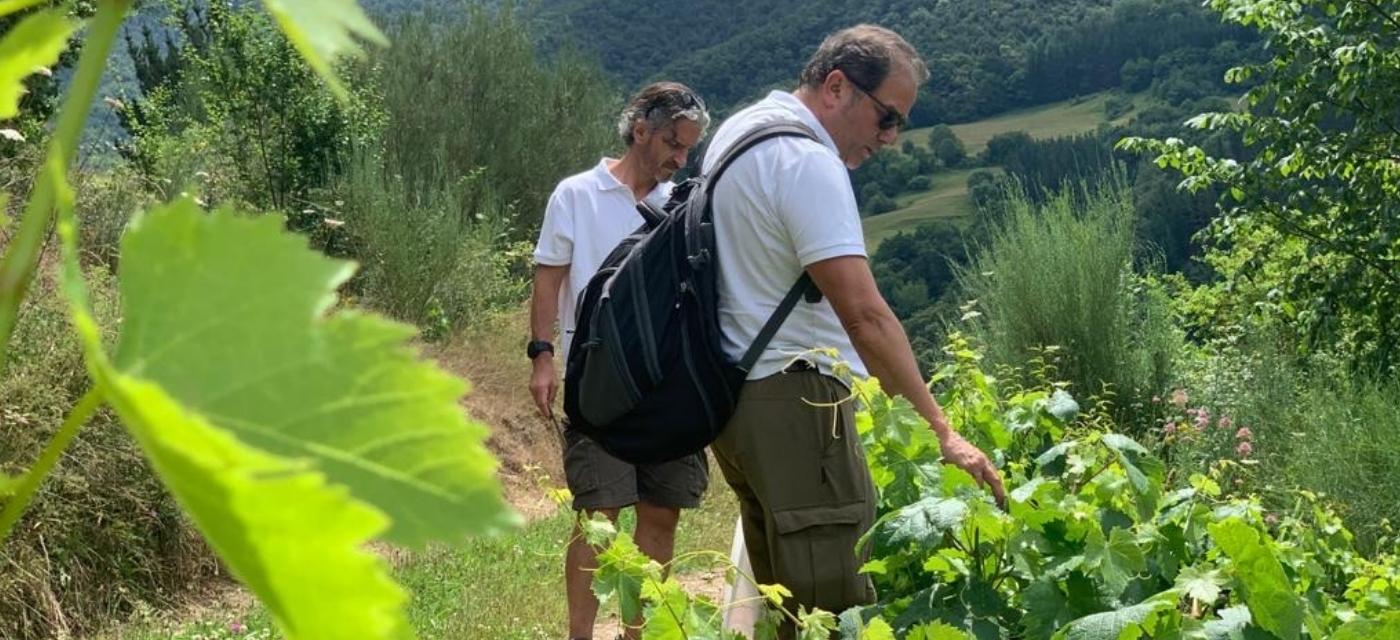
The growers we work with share most of natural wine’s values. They farm small plots, often old vines, and they do most of their work in the vineyard rather than in a laboratory.
- They know their soil and their vines. Granite, slate, limestone, sand: each changes how a vine grows and when its grapes are ready.
- They prevent disease the traditional way, with copper and sulphur and careful canopy work, not systemic chemicals.
- They pick at the right moment, by hand, plot by plot, so the fruit arrives at the cellar ripe, healthy and fresh.
- They intervene as little as possible in the cellar. Native yeasts where the wine allows it, little or no fining and filtering, and only as much sulphur as the wine needs to stay itself.
That last point matters more for us than for a bar in Barcelona. Our wines travel thousands of kilometres by ship across the Atlantic, then 500 km from the port of Montreal to Toronto, and on to customers across Ontario. A wine has to arrive tasting the way its grower intended.
So we choose wines that open beautifully and stay that way: through a long dinner, and the next day too. No lottery. Just attentive craftsmanship.

Comando G winemaker Fernando García hand-harvesting grapes in his Sierra de Gredos vineyard
“What is natural about wine?”
When Comando G winemaker Dani Landi visited Toronto in 2016, he was asked at Patria what he thought of the natural wine movement. His answer:
“What is natural about wine? There is nothing natural about wine. It is touched by the hand of human beings. The grapes are reared by humans, pruned by humans, harvested, and then crushed and fermented into wine.”
We agree. The question isn’t whether a wine is natural. It’s whether the people who made it paid attention.
The wines in practice
- Curro Barreño farms old Garnacha in the Sierra de Gredos. Uvas de la Ira comes from the Tiétar Valley vineyards Landi handed to him in 2022: 70-year-old vines on granite, whole bunches, native yeasts. His El Mentridano comes from his family’s Garnacha in Méntrida.
- Xurxo Alba of Bodegas Albamar ferments O Sebal with its own yeasts and ages it on its lees, with minimal sulphur. Give it some air and it opens up.
- Barco del Corneta bottles Loseco unfined and unfiltered, a step it took years of trials to get right.
- Fedellos do Couto, which Curro co-founded in Galicia, makes Lomba dos Ares in Ribeira Sacra.

Cases of Cosecha’s collaboration wine “Maggie” about to be shipped from Italy to Canada
Where to buy low-intervention wine in Ontario
You won’t find these wines on LCBO shelves. Cosecha Imports brings them into Ontario through the LCBO’s Consignment Warehouse Program and sells them directly to wine lovers, restaurants and other licensees across the province, with the LCBO handling logistics and compliance.
- Buy by the case. Consignment wines are sold in full cases, usually 6 or 12 bottles. Mixed cases let you try several wines at once, and we can put together a case to suit your taste: email info@cosechaimports.com.
- Delivered to your door. Typically 2–3 business days in the GTA and 3–4 business days in the rest of Ontario. See delivery costs.
- Taste first in Toronto. We pour our growers’ wines at tastings through the year. See upcoming tastings.
- Hear about new arrivals first. Small lots sell out quickly. Join the newsletter.


